Chimney Cap Installation and Replacement in Newton, NJ
Chimney cap installation and replacement in Newton, NJ. A cap is a small metal roof and screen over the flue, and it is the least expensive protection a chimney can have.
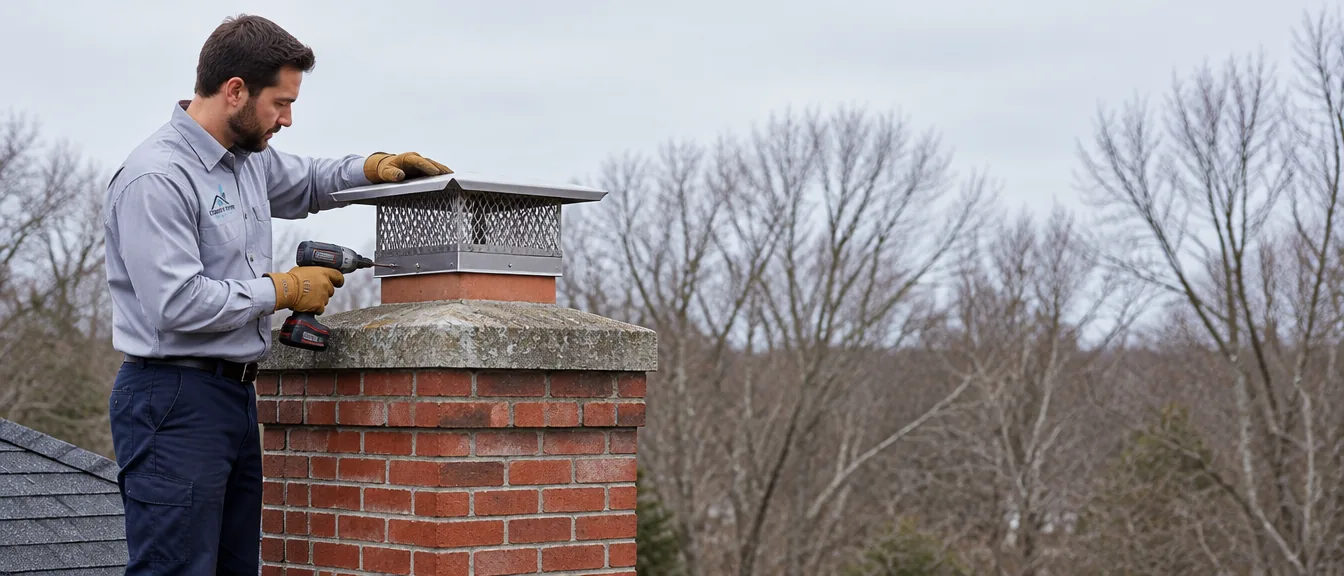
An open flue is a hole in the roof
A chimney without a cap is open to the sky. Every rain and every snowfall goes straight down the flue. The water rusts the damper, soaks the smoke shelf and mixes with soot into an acidic slurry that eats at mortar and metal.
Animals find an open flue quickly. Around Newton, with woods and farmland on every side of town, squirrels, raccoons and birds are common visitors. Chimney swifts are protected by federal law while they are nesting, so once they move in they have to be left until they leave. A cap keeps the question from coming up.
The mesh matters too. It stops burning embers from landing on the roof or in dry leaves, and it keeps windblown twigs out. Openings that are too fine clog with creosote, so the screen has to suit what is being burned.
Signs a cap is missing or worn out
- You can see open flue tile from the ground
- Water or rust in the firebox after rain
- Chirping, scratching or nesting sounds in the flue
- Leaves and twigs dropping into the fireplace
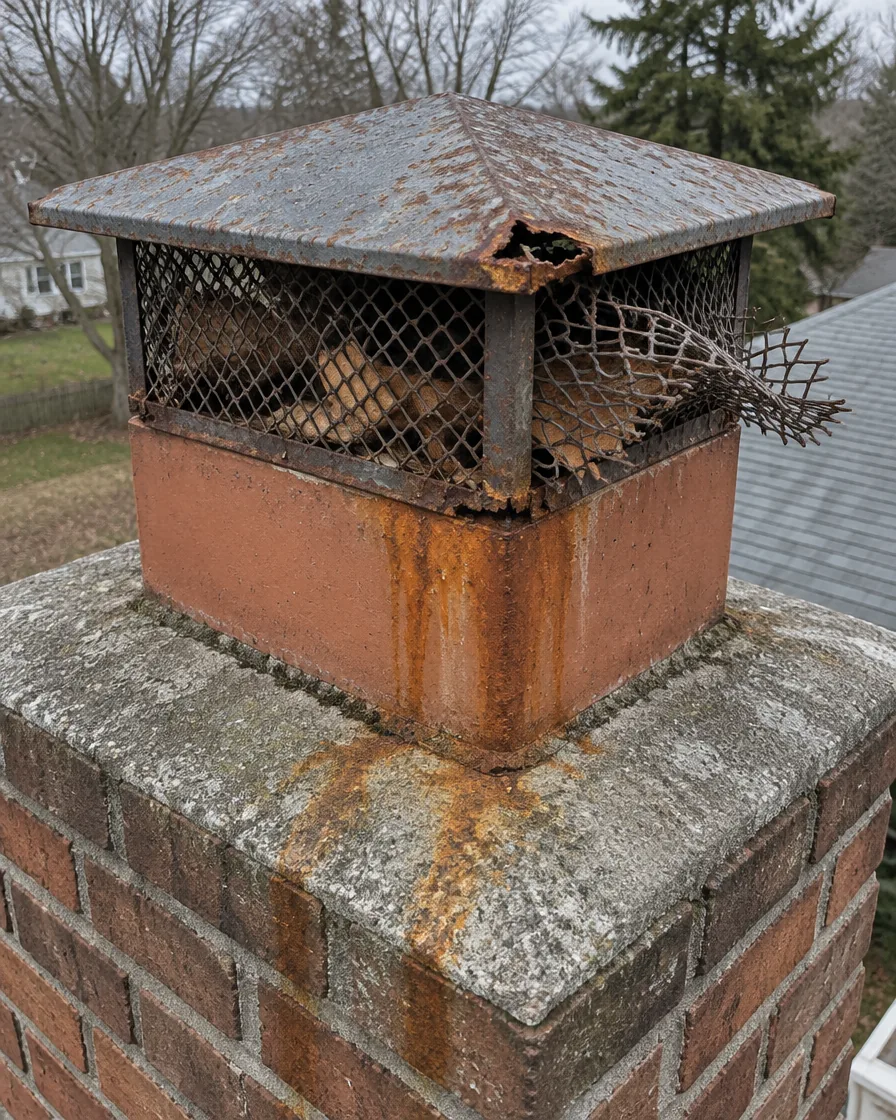
- Rust streaks running down the chimney
- A cap that rattles or sits crooked after a storm
- Mesh that is torn, rusted through or clogged
- Smoke puffing back on windy days
One flue, or the whole top?
There are two ways to cap a chimney. Which is better depends on how many flues it has and the state of the crown.
A single-flue cap suits
- A chimney with one flue tile standing above the crown
- A crown that is sound and sheds water
- A quick, low-cost fix for an open flue
- Round metal chimneys on stoves and prefab fireplaces
A full-coverage cap suits
- Chimneys with two or more flues
- A crown that is cracked or flat and holding water
- Flues that sit flush with the crown
- Owners who want the whole top shielded from weather
Cap types and materials
| Option | What to know |
|---|---|
| Stainless steel | The standard choice. It does not rust, it holds up to heat and it suits every fuel. |
| Copper | Chosen mostly for looks on older and historic houses. It lasts a very long time and weathers to green. |
| Galvanized steel | The cheapest option. The coating wears off in a few years and the cap rusts, which stains the chimney. |
| Draft-improving caps | Shaped to stop wind from pushing smoke back down the flue. Useful on houses in exposed spots or below taller roofs and trees. |
| Top-sealing damper cap | A cap and damper in one, closed from the firebox by a cable. It seals the flue at the top when the fireplace is not in use. |
How a cap is fitted
Measure the flue
The tile or the crown is measured so the cap fits. Flues come in many sizes and shapes.
Check the top
The crown and the top tile are looked over, because a cap fixed to a crumbling tile will not stay on.
Fit and fasten
The cap is seated and secured with screws or anchored to the crown, not just pressed on.
Confirm the draft
The cap is checked for clearance above the flue so smoke leaves freely.
Chimney Cap questions
Does every chimney need a cap?
Every flue benefits from one. That includes furnace and water-heater flues, which are just as open to rain and nesting animals as a fireplace flue.
Can a cap blow off?
A cap that is only clamped loosely to a worn tile can. One that is sized correctly and screwed or anchored down stays put in high wind.
Will a cap affect how my fireplace draws?
A properly sized cap does not restrict the draft. A cap that sits too low over the flue, or one with clogged mesh, can.
How do I know what size cap I need?
It depends on the outside dimensions of the flue tile and how far it stands above the crown. Measuring from the roof is the only reliable way.
Our Other Services
The main service is our chimney sweep in Newton.