Chimney Liner Installation and Replacement in Newton, NJ
Chimney liner installation and replacement in Newton, NJ for fireplaces, wood stoves, inserts and furnaces. A sound liner of the right size is what keeps heat and flue gas inside the chimney.
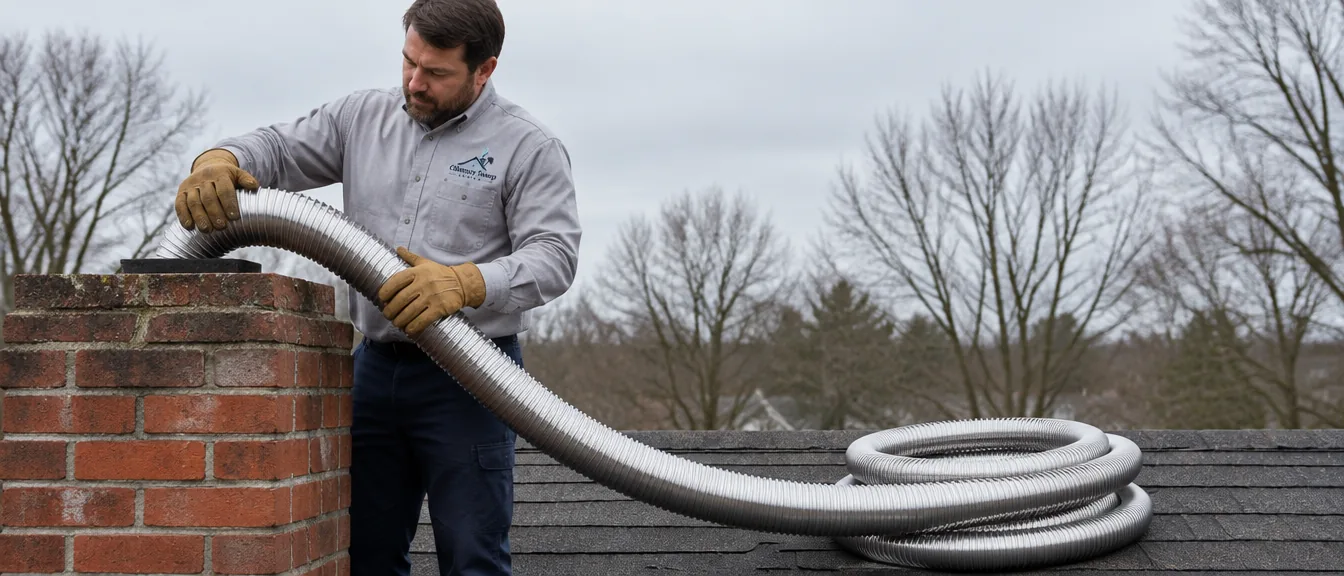
Three jobs, all of them out of sight
A liner is the inner tube of the chimney. It contains the heat of the fire so the brick and the house framing around it stay cool. It carries smoke and gases out without letting them seep through mortar joints into the living space. And it gives the flue a fixed size, which is what makes a stove or furnace draw properly.
Many older chimneys in and around Newton were built with no liner at all, only brick. Others have clay tiles that have cracked after decades of heating and cooling. Either way, acidic flue gases reach the mortar and slowly eat it from the inside.
Size matters as much as condition. A modern wood stove or a high-efficiency furnace sends cooler exhaust into the flue than an open fireplace does. In a flue that is too wide, that exhaust slows down, cools and condenses. The result is heavy creosote with wood, or wet, corrosive deposits with gas and oil.
Signs a chimney needs a new liner
- Pieces of clay tile in the firebox or at the cleanout
- An inspection camera shows cracked or shifted tiles
- The chimney has bare brick inside and no liner
- A new stove, insert or furnace is being connected
- The fuel is changing, for example from oil to gas
- Creosote builds up unusually fast
- There has been a chimney fire
- Mortar or brick is crumbling on the inside of the flue
Stainless steel or clay tile?
Both are sound when installed correctly. The right one depends on the chimney and what it vents.
Stainless steel suits
- Relining an existing chimney without rebuilding it
- Wood stoves and inserts, with insulation around the liner
- Flues that bend or change shape
- Changing to an appliance that needs a smaller flue
Clay tile suits
- A chimney being built or rebuilt from the base
- An open masonry fireplace with a straight flue
- Replacing a few damaged tiles near the top
- Keeping an original chimney as it was built
Liner types, and where each one fits
| Liner | What it is, and when it is used |
|---|---|
| Flexible stainless steel | A corrugated steel tube lowered through the flue and connected to the appliance. It is the usual way to reline an existing chimney, especially one with offsets. |
| Rigid stainless steel | Straight steel sections joined together. It has a smoother wall than flexible liner and suits tall, straight flues. |
| Insulated liner | A steel liner wrapped in insulation or set in an insulating fill. It keeps exhaust hot so it rises quickly, which cuts creosote with wood-burning appliances. |
| Clay tile | The traditional liner. Square or round fired-clay sections stacked with refractory mortar. Durable, but hard to replace in the middle of a standing chimney. |
| Cast-in-place | A cement-like lining formed inside the flue. It adds strength to an old, weak chimney as well as sealing it. |
How a liner installation goes
Inspect and measure
The flue is swept and examined with a camera, and its height and width are measured.
Size the liner
The diameter is matched to the appliance maker's requirements and the height of the chimney.
Install it
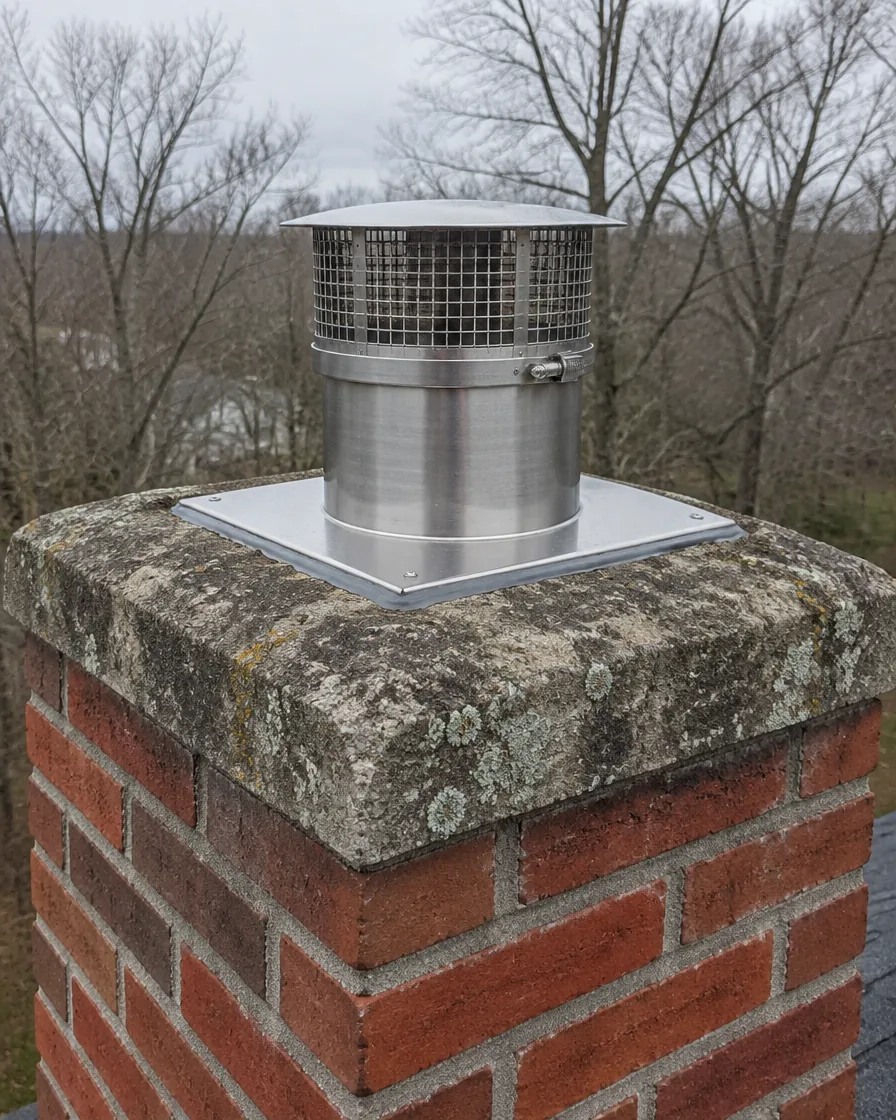
The liner is lowered from the top, connected at the bottom and sealed at the crown with a top plate and cap.
Check the draft
The connection is tested and you are shown the finished job before the appliance is used.
Chimney Liner questions
How long does a stainless steel liner last?
A good-quality stainless liner that is swept regularly can last for decades. Its life depends on the grade of steel, the fuel burned and how well the flue is maintained.
Can cracked clay tiles be repaired instead of replaced?
Sometimes. Minor joint gaps can be resurfaced with a refractory coating. Tiles that are broken, shifted or missing usually mean the flue should be relined.
Does a gas furnace need a chimney liner?
Usually, yes. Gas exhaust is cool and wet, and in an oversized masonry flue it condenses and attacks the mortar. A correctly sized liner prevents that.
Do I need a liner for a fireplace insert?
Yes. An insert should be connected to a liner that runs the full height of the chimney. Venting it loosely into the old fireplace flue leads to poor draft and rapid creosote buildup.
Our Other Services
The main service is our chimney sweep in Newton.