Chimney Repair in Newton, NJ
Chimney repair in Newton, NJ for cracked crowns, worn mortar joints, flaking brick and damaged fireboxes. The cause is found first, so the repair holds through the next winter and the one after.
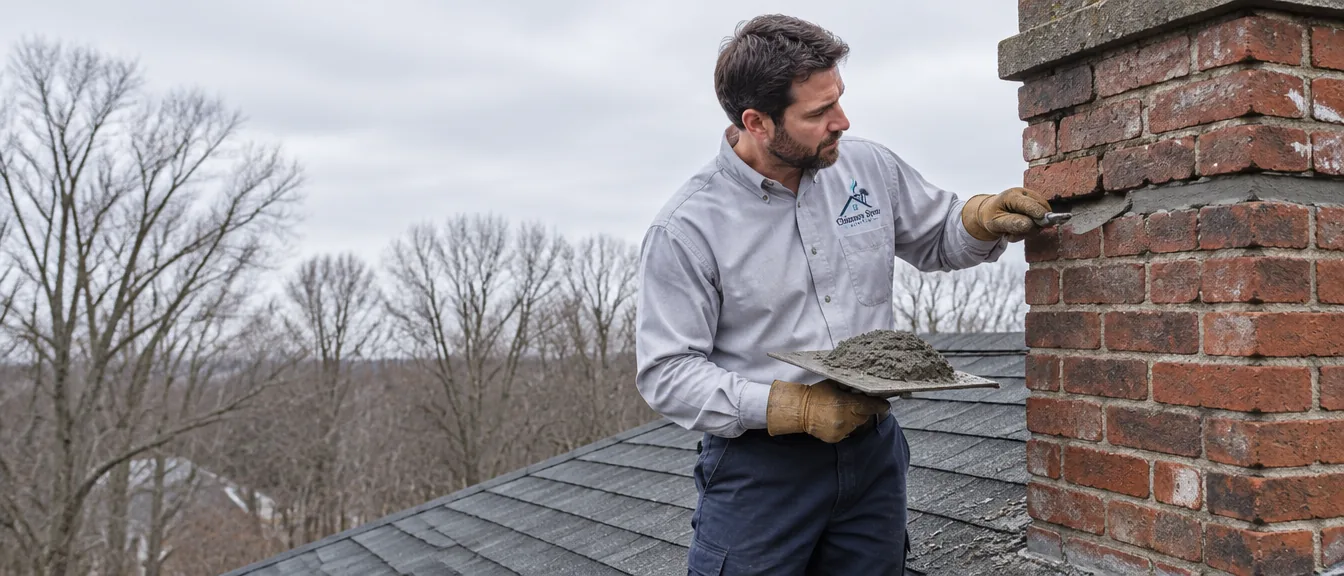
Water gets in, then winter does the rest
A chimney stands above the roof with every side open to the weather. Brick and mortar are porous, so they take in a little water each time it rains or snow melts against them.
Newton sits in the cooler, snowier corner of New Jersey, and temperatures cross the freezing point again and again from late fall into spring. Each time, water held in the masonry freezes and expands. Mortar joints open up first. Then the faces of the bricks start to flake away, which masons call spalling.
Newton is an old county seat. Its centre was laid out in the 1760s and many of its streets are lined with Victorian-era houses. Chimneys of that age were often laid with soft lime mortar, and many have unlined or clay-tile flues. Patching them with hard modern cement can trap moisture and speed up the damage, so the repair has to suit the chimney.
How to tell a chimney needs repair
- Mortar joints that are recessed, sandy or missing
- Brick faces flaking off, or brick chips on the roof and ground
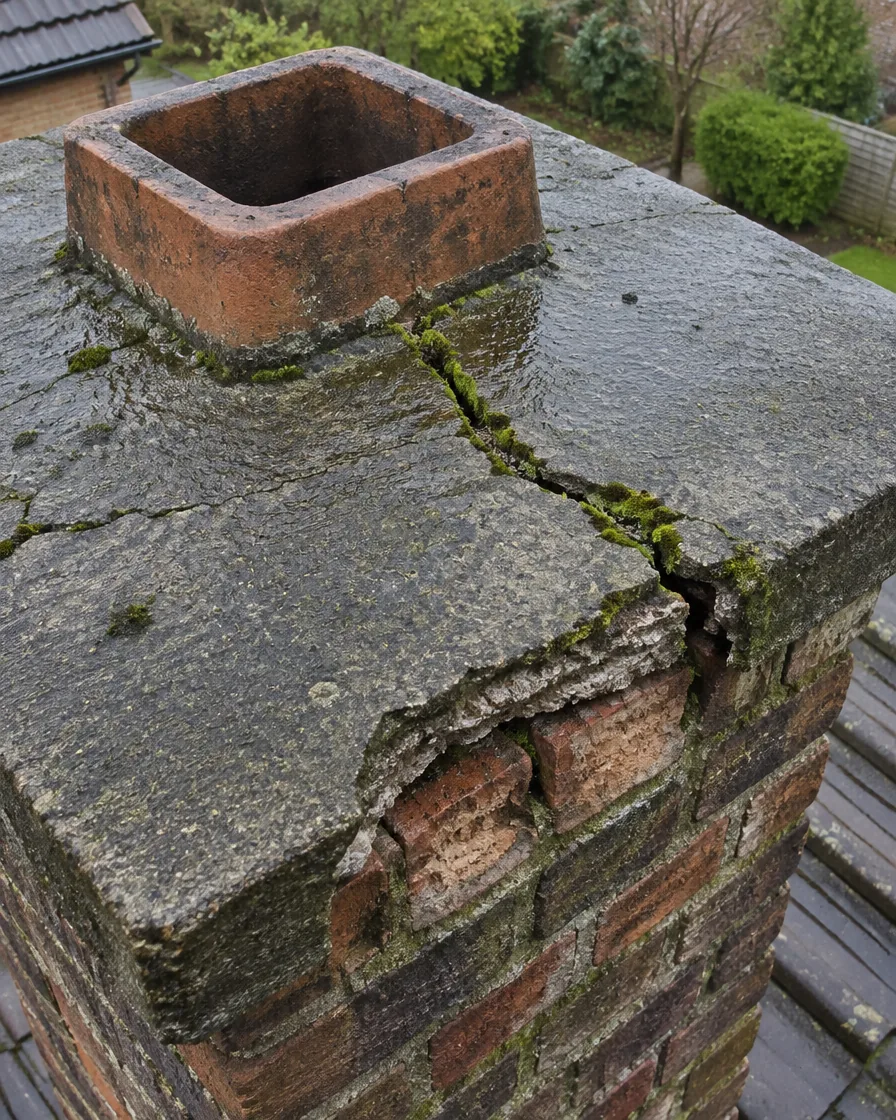
- Cracks across the concrete crown at the top
- White, powdery staining on the brick
- A stack that leans or has shifted from the house
- Loose bricks, or gaps you can see daylight through
- Cracked firebrick or crumbling joints inside the firebox
- Pieces of clay flue tile falling into the fireplace
Repair it, or rebuild it?
The answer depends on how deep the damage goes, not on how the chimney looks from the street.
Repair is usually enough when
- The bricks are sound and only the joints have worn back
- Damage is limited to a few bricks or one face
- The crown is cracked but still bonded to the stack
- The stack is straight and solid when pushed
A rebuild is the safer call when
- Many bricks have lost their faces and keep shedding
- Mortar has washed out deep into the wall
- The stack leans, rocks or has separated from the roofline
- Earlier patches have failed more than once
The repairs a masonry chimney most often needs
| Repair | What is done, and why |
|---|---|
| Repointing | Worn mortar is ground out to a sound depth and the joints are packed with new mortar matched to the old in strength and colour. Done in time, it saves the brick. |
| Brick replacement | Bricks whose faces have flaked off are cut out one at a time and replaced. A spalled brick keeps soaking up water, so patching over it does not last. |
| Crown repair or rebuild | Hairline cracks in the concrete crown can be sealed. A crown that is broken through, or was only ever a thin smear of mortar, is removed and cast again with an overhang and a drip edge. |
| Firebox and smoke chamber | Cracked firebrick and open joints inside the firebox are repaired with refractory mortar. A rough smoke chamber is parged smooth so smoke moves up cleanly. |
| Partial or full rebuild | When the stack above the roofline is loose or leaning, it is taken down to sound masonry and rebuilt. Sometimes that is only the top few courses. |
How a chimney repair goes
Look at the whole chimney
The stack, crown, flashing and cap are checked from the roof, and the firebox and flue from inside.
Explain what was found
You are shown the damage and told what is urgent, what can wait, and what it will take to fix.
Do the repair
The roof and the hearth are protected, failed material is removed back to sound masonry, and the new work is laid and tooled.
Let it cure
New mortar and crowns need time before a fire is lit. You are told how long to wait.
Chimney Repair questions
Can a chimney be repaired in winter?
Some work can, but mortar and concrete need temperatures above freezing to cure properly. Urgent problems are made safe in cold weather, and the lasting repair is best done from spring to fall.
Is it safe to use the fireplace while the chimney needs repair?
It depends on what is damaged. Worn exterior joints are rarely an immediate danger. A cracked flue liner, a damaged firebox or a loose stack is, and the fireplace should stay cold until it has been checked. A chimney inspection settles the question.
What is the difference between repointing and tuckpointing?
Repointing replaces worn mortar in the joints. Tuckpointing is a finish that adds a thin contrasting line to make joints look finer. People often use the words for the same job, and for a chimney the repair that matters is repointing.
Should the chimney be waterproofed after a repair?
Often, yes. A breathable water repellent keeps rain out of the brick while letting trapped moisture escape. Paint and non-breathable sealers hold water in and should be avoided.
Our Other Services
- Chimney Inspection
- Chimney Leak Repair
- Chimney Liner Installation and Replacement
- Chimney Cap Installation and Replacement
The main service is our chimney sweep in Newton.